

Gift cards have quietly become one of Nigeria’s most practical ways to move money. A relative abroad sends an Amazon card instead of a wire transfer. A client pays a freelancer in Steam credit instead of PayPal. A cousin’s birthday gift turns into next month’s data subscription. In every case, the same question comes up: which cards actually convert to cash at a decent rate, and which ones quietly lose you money?
That question matters more than most people realize. Two $100 cards from two different brands can sell for very different amounts in naira, and the gap isn’t random. It comes down to demand, trust, and how easily a card moves through the resale market. Understanding that gap is the difference between getting a fair deal and leaving money on the table.
It also matters if you’re on the other side of the transaction. Vendors and platforms that buy gift cards take on real risk with every purchase , cards that turn out to be already redeemed, flagged, or fraudulently obtained. That risk is priced into the rate they offer, which is part of why some cards consistently pay more than others regardless of who’s buying.
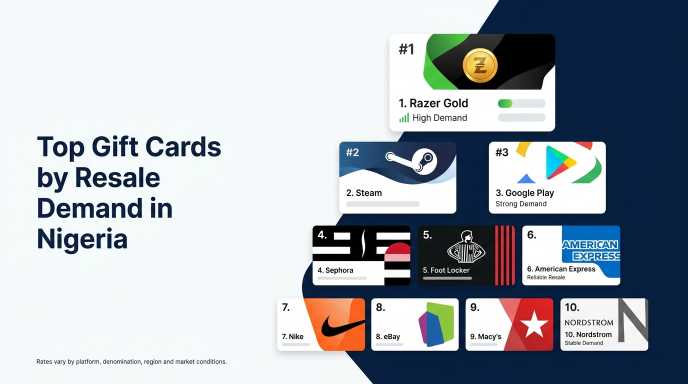
This guide breaks down what drives gift card rates in Nigeria and ranks the ten cards that consistently sell for the most.
How Gift Card Rates Work in Nigeria
A gift card “rate” is simply how many naira you get per dollar (or pound, or euro) of card value. A $100 card at a ₦1,200/$ rate gets you ₦120,000. The same card at ₦1,000/$ gets you ₦20,000 less , for identical face value. That spread is why picking the right card, and the right time to sell it, actually matters.
Four factors move that number:
- Demand. Cards tied to platforms with huge, active user bases , gaming, app stores, streaming , get snapped up fast because buyers know they can resell or redeem them quickly.
- Supply. When a particular card floods the market (common around holiday seasons), rates soften because buyers have plenty of options.
- Seasonality. Gaming cards spike around major game releases and console sales. Retail cards move with shopping seasons like Black Friday.
- Card origin. US and UK-issued cards typically outperform cards from smaller markets, since they’re easier to redeem or resell internationally.
Why Some Cards Pay More Than Others
Beyond the broad factors above, three specifics decide where an individual card lands on the rate table:
- Usability. A card redeemable across multiple services (like a prepaid Amex) behaves differently from one locked to a single storefront.
- Denomination. Higher-value cards ($100+) often fetch better per-dollar rates than $10–$25 cards, since buyers process fewer transactions for the same total value.
- Country of issue. A UK or US Steam card will typically outrate a card issued for a smaller regional market, purely on liquidity.
With that framework in place, here’s how the ten highest-paying cards actually stack up.
Top 10 Gift Cards With the Highest Rates in Nigeria
Rates below are approximate ranges pulled from active Nigerian gift card marketplaces. They shift daily , sometimes within hours , so treat these as a starting benchmark, not a fixed price, and always check a live rate calculator before you commit to a sale.
1. Razer Gold Gift Card
Razer Gold consistently tops Nigerian gift card rate lists, and it’s not close. As a currency for in-game purchases, subscriptions, and digital content across dozens of gaming platforms, it moves fast in a market where gamers make up a large share of active buyers. Current rates sit around ₦1,370–₦1,400 per dollar, with US-issued cards in higher denominations ($100+) pulling the strongest numbers.
If you’re holding a Razer Gold card and want maximum value, that’s usually your best card in the deck.
2. Steam Gift Card
Steam earns its spot through sheer scale , it’s one of the largest gaming platforms on earth, and Nigerian gamers buy into it heavily. That constant demand keeps Steam cards trading at strong, stable rates rather than the volatile swings some niche cards see.
UK-issued Steam cards are the standout here, occasionally outpacing even Razer Gold when converted, thanks to the stronger pound-to-naira exchange baked into the card’s original value. US-issued Steam cards trade slightly lower but remain one of the most liquid cards on the market, easy to sell quickly at a fair price.
3. Apple / iTunes Gift Card
Apple cards are the “safe bet” of Nigerian gift card trading. They rarely crash in value, they’re easy to verify, and demand never really dries up , App Store purchases, subscriptions, and iCloud storage keep the redemption pipeline full.
Denomination matters a lot here. Higher-value cards, generally $250 and above, attract the best rates, while smaller $50–$100 cards trade at a modest discount. Either way, Apple/iTunes remains one of the most dependable cards to convert without haggling over authenticity.
4. Amazon Gift Card
Amazon isn’t always the single highest payer on this list, but it might be the most useful card to hold. As the world’s largest online marketplace, an Amazon card has almost universal appeal, which translates into fast sales and stable pricing even when other cards fluctuate.
If your priority is speed and reliability over squeezing out the last few naira per dollar, Amazon is the card that moves without friction.
5. Google Play Gift Card
Android’s dominance in the Nigerian smartphone market makes Google Play cards a consistent seller. They’re used for app purchases, subscriptions, games, and movies, which keeps a steady stream of buyers looking to top up. Rates typically land a notch below Razer Gold or Steam, but they’re dependable , you’re not likely to get stuck holding a Google Play card waiting for a buyer.
6. Sephora Gift Card
Sephora is a niche entry on this list, but a strong one. Beauty and skincare demand has grown fast in Nigeria, and Sephora cards are in shorter supply than mainstream retail or gaming cards , which pushes rates up for sellers. US-issued cards in higher denominations consistently outperform smaller, non-US variants.
7. Foot Locker Gift Card
Sneaker culture is a genuine economic force in Nigeria, and Foot Locker cards ride that wave. With strong demand from a young, fashion-focused buyer base, Foot Locker cards , particularly US-issued ones , trade at rates competitive with the gaming cards higher up this list.
8. American Express (AMEX) Gift Card
AMEX gift cards work differently from the rest of this list: they function like prepaid debit cards rather than store-specific credit, which means they can be spent almost anywhere Amex is accepted rather than locked to one retailer. That flexibility carries real weight with buyers, but it also means AMEX rates vary more than most , they perform best at higher amounts ($200–$500+), while smaller denominations tend to trade at a noticeable discount. Check a live rate before assuming AMEX is automatically a top payer; on some platforms it is, on others it lags well behind cards like Razer Gold or Steam.
9. Nike Gift Card
Nike’s brand strength keeps its gift cards moving, backed by consistent demand for sportswear and footwear. It won’t usually be the highest-paying card on your list, but it’s reliable , a Nike card rarely sits unsold for long, and rates hold relatively steady compared to more volatile niche cards.
10. eBay, Macy’s, and Nordstrom Gift Cards
Rounding out the list are three retail cards that share a similar profile: solid but not spectacular resale value, propped up by international shopping demand. eBay’s marketplace breadth gives it decent liquidity, while Macy’s and Nordstrom appeal to buyers looking for US fashion and home goods. None of the three will outrate Razer Gold or Steam, but all three sell reliably enough to be worth holding onto rather than letting the balance go unused.
Getting the Most Out of Your Gift Card
A few habits separate sellers who consistently get fair value from those who don’t:
- Compare more than one platform. Rates for the same card can differ noticeably between trading platforms on the same day. A quick comparison before you sell is worth the extra five minutes.
- Sell higher denominations when you can. As the breakdown above shows, bigger cards often carry better per-dollar rates than smaller ones.
- ICheck the card’s origin. US and UK-issued cards consistently outperform cards from smaller markets , worth knowing if you have a choice in which card you accept as a gift or payment.
- Don’t wait too long to sell. Rates move daily. A card sitting unused for weeks isn’t earning you anything, and there’s no guarantee the rate will improve by holding.
Gift cards aren’t going anywhere as a form of digital currency in Nigeria , if anything, the market keeps getting more structured and competitive. Knowing which cards carry real resale weight, and why, puts you in a much better position the next time one lands in your inbox or your wallet.
How to Check and Sell Gift Cards for the Best Rates in Nigeria
You’ve probably noticed the same gift card doesn’t always sell for the same price. Post it on a Tuesday and you might get one number. Wait until Friday and the rate’s shifted, sometimes by a meaningful margin. That’s not a glitch , it’s how the market actually works, and once you understand why, you can time and place your sales to consistently pull in more naira.
This guide walks through why rates move, how to check them before you commit, and the exact steps to sell a card without losing value to a bad platform or a rushed submission.
Rate Comparison & Daily Changes
Gift card rates aren’t fixed. They shift daily , sometimes hourly , based on demand, how much supply is sitting on the market, and how easy a given card is to resell. A Steam card that sold for a strong rate last week could sell for less this week if a wave of sellers flooded the market, or more if a big game launch just sent demand climbing.
This is exactly why comparing the current rate before you sell isn’t optional if you actually care about getting fair value. Selling on autopilot, without checking where the rate sits today, is the single easiest way to leave money behind. The fix is simple: pull up a live rate before every sale, not just the first time you use a platform.
How to Check Gift Card Rates Instantly
Checking a rate takes less time than it took to read the last section. Most gift card trading platforms and apps build a rate calculator directly into their homepage or app , you don’t need to create an account or submit anything to see a number.
How It Works
The process is nearly identical across platforms:
- Pick the gift card type you’re planning to sell , Steam, Amazon, Apple/iTunes, and so on.
- Select the region or currency the card was issued in (US, UK, and EU cards often carry different rates for the same brand).
- Choose the denomination or enter the card’s value.
- View your payout instantly, usually shown in naira before you commit to anything.
The real value here isn’t just seeing one number , it’s running the same card through two or three platforms back to back. Rates for an identical card can differ enough between platforms that the five minutes you spend comparing pays for itself.
Tutorials: How to Sell Gift Cards at the Best Rates
Once you know what your card is worth, selling it correctly matters just as much as picking the right rate. A good rate on a slow or unreliable platform doesn’t help you if your payment takes a week to arrive.
Choosing the Right Platform
Not every gift card platform deserves your card. Before you submit anything, weigh a platform against four things:
- Rates. Compare what you’re being offered against at least one other platform for the same card and denomination.
- Payment speed. Some platforms pay within minutes of verification; others take hours or days. If speed matters to you, check this before you sell, not after.
- Reputation. Look for platforms with a consistent track record , reviews, social proof, and how long they’ve operated matter more than a flashy rate that seems too good to be true.
- Customer support. Verification issues happen. A platform with responsive support resolves them fast; one without leaves you waiting on a card you can’t use elsewhere in the meantime.
Step-by-Step Selling Process
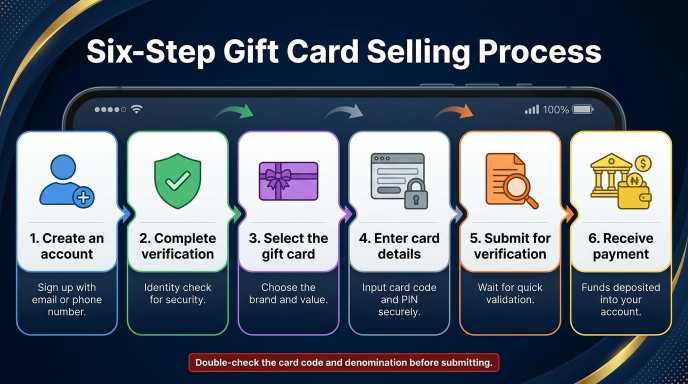
Most platforms follow the same basic flow, whether you’re selling through a website or an app:
- Create an account. This usually takes a couple of minutes and just needs an email or phone number.
- Complete verification. Expect to confirm your identity and, in most cases, link a bank account or wallet for payment.
- Select the gift card you’re selling from the platform’s supported list.
- Enter the card details , the code, PIN, or a photo of the card, depending on what the platform requires.
- Submit the card for verification. The platform checks the card’s balance and validity before finalizing your payout.
- Receive payment, typically straight to your bank account or wallet once verification clears.
Skipping steps or rushing through card details is where most delays come from , double-check the code and denomination before you submit rather than after a platform flags it.
Tips to Maximize Your Gift Card Value
A few small habits consistently separate sellers who get top rates from sellers who leave money on the table:
- Sell when demand is high. Gaming cards move faster around major releases; retail cards do better around shopping seasons. Timing a sale to match demand can bump your rate noticeably.
- Keep physical cards and receipts where applicable. Some platforms pay more for physical cards than e-codes, and a receipt can speed up verification if a card’s authenticity is ever questioned.
- Check the card’s denomination and region before submitting. As covered above, these two details alone can shift your rate significantly , confirm them before you submit, not after you’ve already been quoted a lower number.
- Avoid common trading mistakes. Don’t accept the first offer without comparing, don’t sell on unverified platforms chasing a slightly better rate, and don’t submit a card you haven’t confirmed the balance on.
None of this requires special expertise , it just requires treating a gift card like the cash it represents. Check the rate, compare your options, and follow the verification steps carefully, and you’ll consistently walk away with a fair payout instead of wondering afterward if you left money on the table.
Gift Card Trading in Nigeria: Risks, FAQs
A high rate means nothing if the platform never pays you. Nigeria’s gift card market has grown fast enough to attract plenty of legitimate players , and a fair number of scams riding on their coattails. Before you chase the best possible payout, it’s worth spending a few minutes on the risks that actually cost people money.
Risks and Considerations
Fraud Prevention
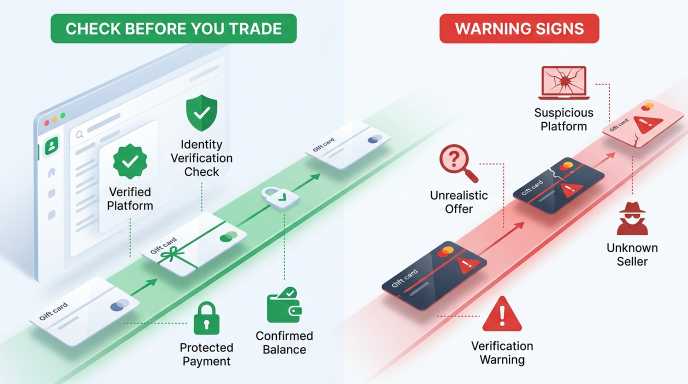
Fraud runs in both directions in this market. Sellers occasionally get burned submitting cards to fake platforms that vanish after collecting the code. Buyers face the same risk from the other side , cards that turn out to be already redeemed or fraudulently obtained in the first place. That shared risk is part of why legitimate platforms verify every card before releasing payment, and why that verification step exists for your protection as much as theirs.
Rate Volatility
Rates swing daily based on demand and supply, which means the number you see this morning isn’t guaranteed by afternoon. That volatility isn’t a red flag on its own , it’s just how the market works , but it does mean locking in a rate the moment you’re happy with it beats waiting around hoping for a better one that may never come.
Platform Trustworthiness
Not every platform advertising “the best rates” delivers on that promise. Before you submit a single card detail, verify the platform itself: look for a real track record, consistent reviews, and clear terms on how payment works. Two habits protect you here more than any other:
- Verify the platform before submitting gift card details. A quick search for reviews or complaints takes less time than the sale itself.
- Be cautious of unusually high rates or payment promises. If one platform is offering noticeably more than every competitor for the same card, treat that as a reason to double-check, not a reason to rush.
FAQs
What Is the Highest Gift Card Rate in Nigeria Right Now?
Rates change daily, but gaming cards , particularly Razer Gold and UK-issued Steam cards , consistently rank among the highest payers in the Nigerian market. Always confirm the live rate on a trading platform before selling, since the specific number shifts often.
How Much Is a $100 Steam Card in Naira?
It depends on the card’s region and the platform’s current rate, but a $100 Steam card typically converts to somewhere in the low-to-mid six figures in naira. Check a live rate calculator for the exact figure on the day you’re selling , this is one of the numbers that moves the most.
Which Gift Card Pays the Most in Nigeria?
Gaming cards like Razer Gold and Steam tend to lead the pack, followed closely by Apple/iTunes. That said, “most” depends on the specific card’s region and denomination , a US Steam card and a UK Steam card won’t necessarily pay the same rate.
Where Can I Check Gift Card Rates in Nigeria?
Most established gift card trading platforms build a free rate calculator directly into their site or app. You typically select the card type, region, and denomination, and get an instant payout estimate with no account required.
Is It Safe to Sell Gift Cards Online?
Yes, as long as you’re selling through a verified, reputable platform. The risk isn’t in gift card trading itself , it’s in skipping the verification step and dealing with an unproven platform because the rate looked good.
Do Physical Gift Cards Pay More Than E-Codes?
Often, yes. Physical cards are generally easier for a platform to verify as legitimate, which tends to translate into a slightly better rate compared to a digital code alone. It’s worth keeping the physical card and any receipt if you have the option.
Can I Make Money Trading Gift Cards?
You can, particularly if you’re regularly receiving cards as gifts or payment and converting them strategically , selling high-demand cards, comparing platforms, and timing sales around demand spikes. It’s less about finding a single trick and more about applying the same habits consistently.
The gift cards that consistently attract the highest rates in Nigeria share a few traits: strong global demand, easy verification, and issuance from a major market like the US or UK. Gaming cards like Razer Gold and Steam typically lead, with Apple/iTunes, Amazon, and a handful of retail and beauty cards rounding out a solid resale lineup.
None of that matters much if you skip the fundamentals, though. Check the current rate before every sale , don’t rely on what a card sold for last time. Compare more than one platform rather than settling for the first quote. And treat platform security as seriously as the rate itself; a slightly lower payout from a verified, trustworthy platform beats a flashy number from one you can’t confirm.
When you’re deciding what to do with a gift card, run through the same short list every time: demand, denomination, region, and card type. Get those four right, verify who you’re selling to, and you’ll consistently land closer to what your card is actually worth.